
Interesting Facts About Ocracoke Island's Loggerhead Sea Turtles
Sea turtles return to Ocracoke's beaches each summer, nesting quietly after dark and shaping one of the Outer Banks' most meaningful natural stories.
On Ocracoke Island, long after umbrellas are folded and the shoreline settles into darkness, something remarkable begins to happen along the sand. Loggerhead sea turtles, ancient travelers of the Atlantic, return to this stretch of the Outer Banks to do what they have done for thousands of years.
Every nesting season, Ocracoke becomes one of the most active and successful loggerhead nesting areas in the region. This is not something you usually stumble upon during a casual beach walk. It happens slowly, deliberately, and almost always at night. It is a reminder that the island is not just a vacation destination, but part of a much larger coastal ecosystem that depends on care, patience, and respect.
Here's a tiny taste of what's ahead:
- Why Ocracoke Matters: Why the island's beaches support one of the OBX's strongest loggerhead nesting areas.
- A Loggerhead's Night Ashore: What happens when a female turtle comes ashore to lay her eggs.
- Finding the Nests: How early-morning beach surveys identify turtle crawls and nesting sites.
- Protecting the Eggs: How nests are marked, monitored, and kept safe for roughly 55 days.
- Life Beneath the Sand: How incubation works and why sand temperature matters.
- Hatch Night: What happens when hatchlings emerge and head for the ocean.
- Why Darkness Counts: How artificial light affects hatchlings and why dark beaches matter.
- Turtle Tracks: What visitors may notice on the beach and what those tracks mean.
- If You Spot Nesting Activity: Who to call and what to avoid doing.
- Volunteers on Ocracoke: The role local volunteers play during nesting season.
- Lessons From Turtle Season: How simple beach habits support conservation.
- Watching Without Disturbing: Ways to learn about hatchlings without interfering.
- How You Can Help: Easy actions visitors can take during their stay.
From the serene satisfaction of waking up to soundfront or harbor views to the joy of a dog-friendly vacation home where every member of the family is welcome, we at Ocracoke Island Realty offer an array of amenities designed to elevate your stay and make your getaway extra special.
Want more tips about Ocracoke Island? Head to our destination blog. As experts in all things Ocracoke, we've got plenty of local insights on year-round events, the best breakfast spots in town, perfect weekend itineraries, Ocracoke's best-kept secrets, and much more.
In this blog post, I'll share interesting facts and helpful insights about sea turtles on Ocracoke Island, perfect for nature lovers and anyone fascinated by these remarkable creatures.
Let's dive into the details!
1. Why Ocracoke Matters to Loggerhead Sea Turtles
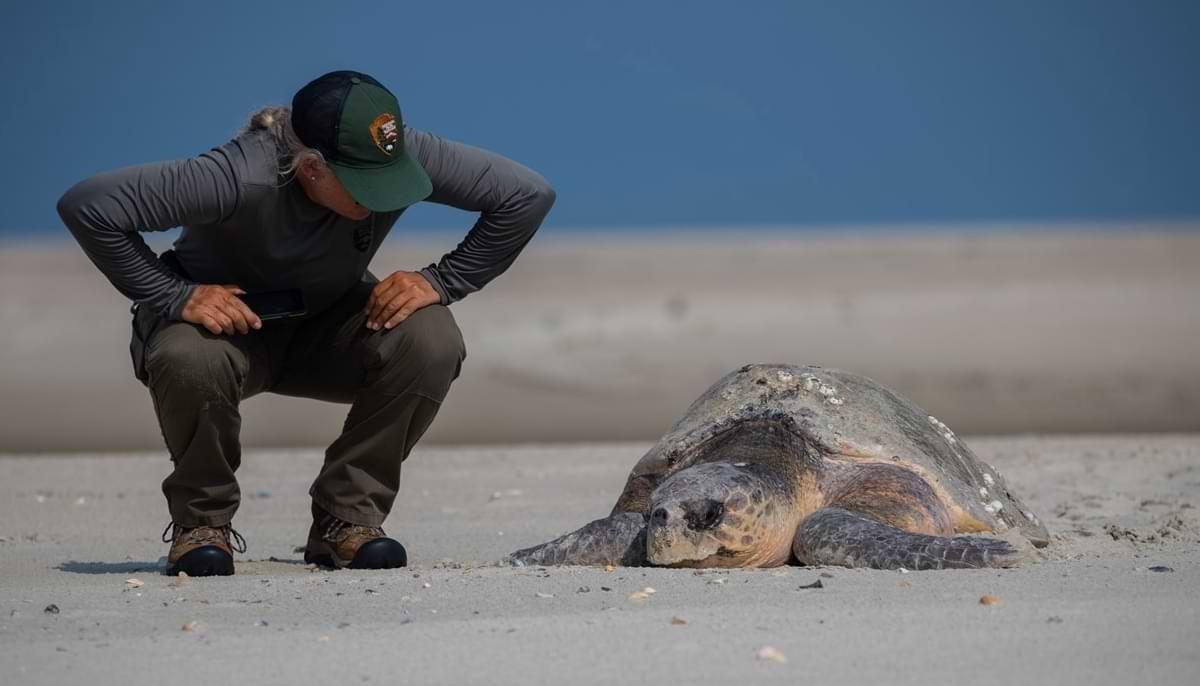
Loggerhead sea turtles are an endangered species, and safe nesting beaches are limited. Successful nesting requires the right balance of sand quality, beach slope, temperature, and darkness. Too much development or light can disrupt the process entirely.
Ocracoke offers rare conditions that still work in the turtles' favor.
Wide beaches, relatively low development, and large sections managed by Cape Hatteras National Seashore allow turtles to nest with fewer disturbances. As a result, Ocracoke consistently ranks as one of the more active and successful nesting areas along the Outer Banks.
In 2021 alone, the island recorded 98 sea turtle nests, a number that reflects both healthy nesting activity and careful monitoring throughout the season.
2. The Night a Loggerhead Comes Ashore
Nesting begins offshore. A female loggerhead, often returning to the same region where she once hatched, approaches land under the cover of darkness.
Once on the beach, she moves above the high tide line and begins digging a nest using her rear flippers. This process is slow and physically demanding, often taking more than an hour. When the nest is complete, she deposits around 100 eggs, carefully covers them with sand, and disguises the site before heading back to the ocean.
There is no guarding, no return visit. From that moment on, the eggs are left to develop beneath the sand.
3. How Nests Are Discovered
During nesting season, the beaches are surveyed early each morning by National Park Service Resource Management staff and trained volunteers. These walks happen before most visitors are awake, when the sand still holds clear signs of nighttime activity.
The most recognizable clue is the crawl.
Loggerhead turtles leave wide, symmetrical tracks leading from the ocean to the nesting site and back again. When a crawl is spotted, staff carefully confirm the presence of a nest.
Once verified, the area is marked and protected.
4. Protecting the Nest
Each nest is typically marked off for about 55 days. During this time, barriers and signage keep foot traffic and vehicles at a safe distance.
Monitoring continues throughout the incubation period. Volunteers and park staff check for erosion, predators, or disturbances that could threaten the eggs. In some cases, protective screens are placed over the nest to discourage animals such as raccoons while still allowing hatchlings to emerge later.
The goal is simple but critical. Give the eggs space, time, and darkness.
5. What Happens Beneath the Sand
While the beach above looks unchanged, important work is happening below the surface.
The eggs incubate in the sand, warmed by the sun. Temperature plays a major role during this stage. It influences development and also affects the sex of the hatchlings. Warmer sand tends to produce more females, while cooler sand produces more males.
This delicate balance makes stable beach conditions essential. Even small disruptions can affect the outcome.

6. Hatch Night on Ocracoke
After roughly two months, the nest reaches its most vulnerable moment.
Hatchlings typically emerge at night, when cooler temperatures and darkness offer some protection. Once they break through the sand, dozens of tiny turtles surface almost at once.
Their instinct is immediate. They head toward the brightest horizon, which under natural conditions is the reflection of moonlight on the ocean.
This short journey, often lasting only minutes, determines survival.
7. Why Darkness Matters So Much
Artificial light poses one of the greatest threats to hatchlings.
Lights from homes, vehicles, phones, or flashlights can confuse young turtles, drawing them away from the ocean and toward danger. Even a single unshielded light can disrupt their natural orientation.
On Ocracoke, efforts to limit beachfront lighting during nesting and hatching season make a measurable difference. Dark beaches help hatchlings reach the water quickly and begin their offshore journey.
This is why visitors are asked to avoid nighttime beach lighting and photography during turtle season.
8. Seeing Turtle Tracks on the Beach
Most visitors will not see a nesting turtle or a hatchling emergence, and that is intentional. These events are meant to remain quiet and protected.
What visitors may notice instead are turtle tracks on the beach in the early morning hours. These wide, patterned marks often stretch from the shoreline to the dunes and back again.
If you see tracks or suspect nesting activity, the best response is to keep your distance and report it.
9. What To Do If You Spot Nesting Activity
Visitors who notice signs of sea turtle nesting are advised to contact Cape Hatteras National Seashore to report the sighting.
Phone number: 252 216 6892
Avoid touching the area, attempting to mark it, or getting close for photos. Well-intentioned actions can still cause harm.
10. The Role of Volunteers on Ocracoke
Sea turtle conservation on Ocracoke relies heavily on volunteers who commit their time throughout the nesting season.
These individuals walk the beaches at dawn, track nesting activity, help maintain protective barriers, and assist with monitoring hatch events. Their work supports the National Park Service and allows the island to manage a high number of nests responsibly.
For many volunteers, this effort becomes a meaningful connection to the island and its wildlife.
11. Learning From the Process
Sea turtle season offers a powerful lesson in coexistence.
Simple actions take on greater meaning once you understand what is happening beneath the sand. Filling in beach holes, removing personal items at night, packing out trash, and respecting marked areas all contribute to the success of nesting turtles.
Ocracoke treats this process with quiet respect. There are no crowds gathered around nests and no scheduled spectacles. Conservation here works best when it stays low-key.
12. Watching Hatchlings Without Disturbing Them
Occasionally, park staff may allow controlled observation of a hatchling emergence when conditions are safe and appropriate. These moments are carefully managed to protect the turtles.
For those who want to see hatchlings without impacting them, a video is available showing hatchlings heading into the ocean at the Ocracoke Campground beach.
It offers a glimpse of this brief but important moment without disrupting the real thing.
13. How Visitors Can Help During Their Stay
Supporting sea turtles on Ocracoke comes down to awareness and restraint.
A few habits make a real difference:
- Keep beachfront lights off at night.
- Avoid flash photography near marked nests.
- Respect all posted barriers and signage.
- Fill in sand holes before leaving the beach.
- Remove chairs and umbrellas at the end of the day.
- Report nesting activity to park authorities.
These actions help protect nests that may be hidden just beneath the sand.
A Bigger Story Along the Shoreline
Sea turtles are not a seasonal attraction on Ocracoke. They are part of the island's natural rhythm, returning year after year to the same stretch of coastline.
Their success here reflects years of careful stewardship and a shared understanding that some of the island's most important moments happen quietly, without an audience.
Walking Ocracoke's beaches during nesting season means sharing space with a much older story. One that continues long after the last set of tracks fades, and the hatchlings disappear into the surf, beginning a journey that may one day lead them back to the same shore.

Planning a trip to Ocracoke Island?
Stay like a local with Ocracoke Island Realty, where the island's most inviting vacation rentals are ready and waiting. You'll find waterfront homes with private docks, cozy cottages that welcome pets, and roomy spots with pools perfect for lazy afternoons. Every house has its own personality since each one is individually owned, so you get a place that truly fits your style. And if you need help choosing, our team of year-round locals is great at matching guests with the right home.
Curious what's waiting for you? Take a look at our rentals and find your match.